Real Estate Closing Wire Fraud: How AI Is Changing Closings
Summary
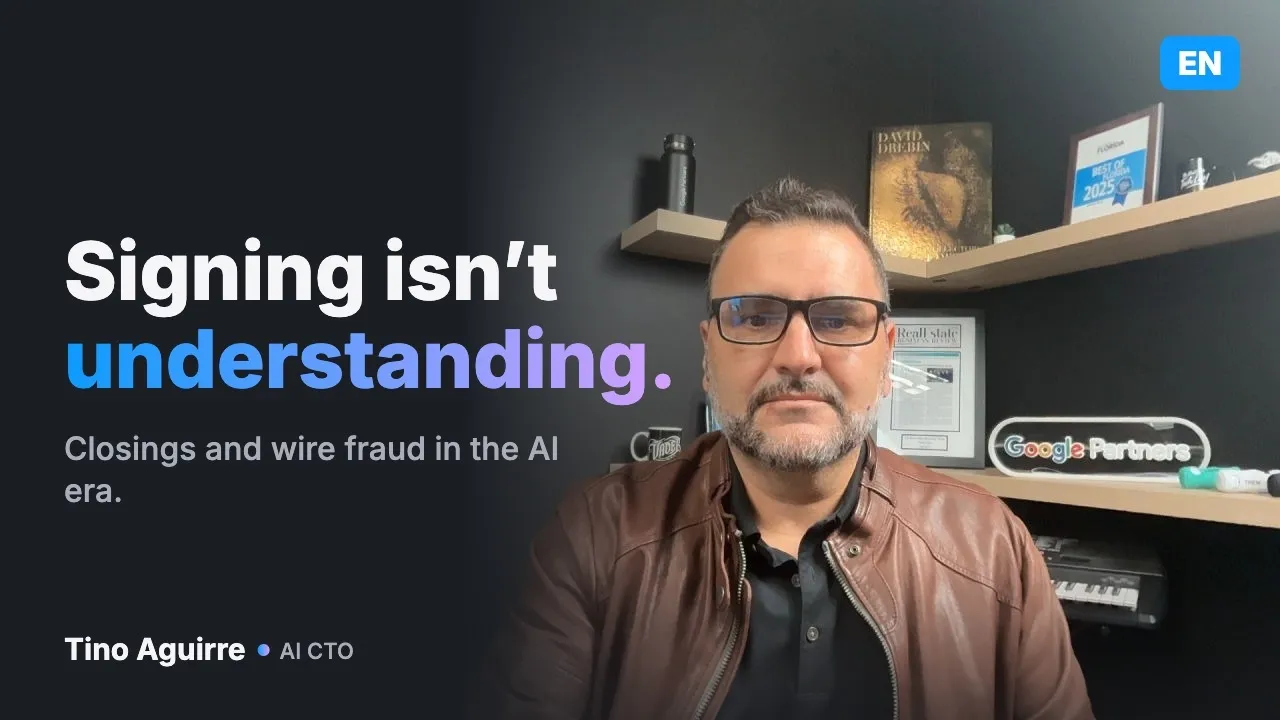
Your closing documents arrive at midnight, and you sign them on your phone. It’s easy, but signing isn’t the same as understanding. In this video, based on chapter 11 of The AI Real Estate Disruption, Tino Aguirre explains what AI changes in real estate closings and the new risks it brings, starting with real estate closing wire fraud.
Today there are tools that review closing packages, compare versions and catch things like an old mortgage still showing on the public record. But the same technology makes impersonation more convincing: if someone changes the wire instructions, verify it through a channel you agreed on beforehand, never through that same email.
Key points: real estate closing wire fraud
- Signing on your phone is easy, but signing isn’t the same as understanding.
- AI already reviews closing files, compares versions and spots issues on the public record.
- “Complete” isn’t “resolved”: documents arriving doesn’t mean the issues are solved.
- Never accept changed wire instructions by email: verify them through a channel agreed on beforehand.
- If technology reduces the work behind a closing, ask who keeps those savings.
Frequently asked questions
How do I avoid real estate closing wire fraud?
If someone changes the wire instructions, verify it through a channel you agreed on beforehand, never by replying to the same email that asks for the change.
What does AI review in a real estate closing?
It can review document packages, compare versions and flag issues such as an old mortgage still showing on the public record, which saves hours of work.
What does it mean when a closing file is “complete”?
It depends on who says it: for some it means the documents arrived, for others that the issues are resolved. It's worth asking which one they mean.
Transcript
Your closing documents arrive at midnight, and you sign them on your phone. It was easy. But signing isn’t the same as understanding.
I’m Tino Aguirre, AI CTO at TREM Group and IDXBoost. I build AI for real estate and use it every day with my team.
Today there are tools that review closing packages, compare versions and catch things like an old mortgage still showing on the public record. That saves hours.
But watch the word “complete.” For some, it means the documents arrived. For others, that the issues are resolved. They’re not the same.
And there’s a new risk in real estate closing wire fraud: the same technology that makes conversations easier also makes impersonation more convincing. If someone changes the wire instructions, verify it through a channel you agreed on beforehand, never through that same email.
If technology reduces the work behind a closing, ask who keeps those savings: you, in price and service, or the company, as margin.
Which automated check would you accept, and which one would you want a person to explain before you send your money?
And if you’re buying, selling or investing, TREM Group recommends working with agents who use AI, and who also verify every fact, explain the trade-offs and stand behind what they promise. That’s how we work at TREM Group.
And my full book is free at tinoaguirre.com/book.